The Char Dham Yatra begins at Haridwar, not at Delhi, and the 220 km between the two is the only stretch of the whole trip you can plan to the minute months in advance. Trains leave on time and cost between ₹150 and ₹985; roads cost what they cost and take what they take. Which is why the useful question is not “train, bus or car” but which of three arrival windows you want to buy — before dawn, late morning, or after dark — because that choice decides whether Delhi adds a day to your yatra or none at all.
Short answer: take the overnight Mussoorie Express out of Old Delhi at 10:25 PM and you are in Haridwar at 5:50 AM, ready to drive to Barkot the same morning — that is the only Delhi departure that gives you a zero-day start. The 6:45 AM Shatabdi (Haridwar 11:35 AM) buys you a Rishikesh evening and one extra night. Driving is worth it from three passengers up: about ₹2,100 for the car one way in fuel and tolls, against ₹830 a head on the Shatabdi. Whichever you pick, the road leg is 4.5 to 6 hours, not the two and a half that the expressway headlines promise — the expressway does not reach Haridwar yet.
Last verified: 9 November 2026 — against Indian Railways timetables for 12017, 12055, 22457, 14041, 22458 and 12018, November 2026 booking-site fares for the Delhi–Haridwar segment, the Ministry of Road Transport and Highways announcement of 27 October 2026 on the Delhi–Haridwar corridor, The Hindu‘s report of the Delhi–Dehradun expressway inauguration on 14 April 2026, the Haridwar district administration’s own How to Reach page, and this site’s itinerary and 2027 hub. Train times are the current timetable and change with the winter schedule; check before you book.
The three arrivals, and what each one costs you in days
Everything on the circuit is timed from the moment you reach Haridwar. The four shrines are 1,350 km of road and 22 km of trail from there, and the first leg — Haridwar to Barkot — is 190 km and seven to eight hours. So the arrival time you buy is really a decision about your first night, and your first night is a decision about how many days the whole trip takes.
| Arrival window | How you buy it | Your first night | Days Delhi adds |
|---|---|---|---|
| Before dawn, 5:50 AM | Mussoorie Express from Old Delhi at 10:25 PM, or a car leaving Delhi at 11:00 PM | None in Haridwar — leave for Barkot at 7:00 AM and reach it by 3:00 PM | 0 |
| Late morning, 11:35 AM | Shatabdi from New Delhi at 6:45 AM, or a car leaving Delhi at 4:00 AM | Haridwar or Rishikesh; Ganga Aarti at Har Ki Pauri around 6:00 PM | 1 |
| Evening, 7:27 PM to 9:11 PM | Jan Shatabdi at 3:20 PM or Vande Bharat from Anand Vihar at 5:50 PM | Haridwar, near the station, for a 5:00 AM start | 1 |
The overnight train is the one people miss. It leaves Old Delhi at 10:25 PM, gives you a berth rather than a seat, and puts you on the platform at Haridwar at 5:50 AM — the same hour the buses from ISBT arrive. You are in a car by 7:00 AM and at Barkot by mid-afternoon, which is the first night of the nine-day plan in our day-by-day itinerary. That is the difference between a nine-day yatra and a ten-day one, and it costs about ₹190 in sleeper class — but only if the car and driver are already waiting in Haridwar, booked for the whole circuit and told the train number rather than the arrival time.
What the expressway changed, and what it has not
The Delhi–Dehradun expressway opened on 14 April 2026: 213 km of six-lane access-controlled road, ₹12,000 crore, and it genuinely cut Akshardham to Dehradun from six hours to about two and a half. It also does not go to Haridwar. Haridwar sits on a separate four-lane bypass — a ₹2,300 crore greenfield corridor whose first phase was expected by October 2026 when the expressway was inaugurated.
On 27 October 2026 the Union road transport minister said the Delhi–Haridwar link would open “next month”, cutting the run to 90 minutes. As of 9 November 2026 no opening notification has been issued and no operator is selling a 90-minute Delhi–Haridwar transfer. Treat it as a project on the verge of opening, not a road you can plan a 6:00 AM departure around. The route that exists today is unchanged: leave the expressway at Muzaffarnagar or Saharanpur and cover the last 70 to 80 km to Haridwar on the ordinary Roorkee road.
| Route | What it is | Distance | Realistic time | Car toll |
|---|---|---|---|---|
| Delhi–Meerut Expressway, then NH-334 through Muzaffarnagar and Roorkee | The default. Fast to Meerut, then a divided highway with a market town every 40 km | About 220 km | 5 to 6 hours | Roughly ₹200–400 across the plazas |
| Delhi–Dehradun Expressway, exit at Muzaffarnagar or Saharanpur | The new road, for the first 180 km. Empty and fast, then 70–80 km of ordinary highway into Haridwar | About 250 km | 4.5 to 5.5 hours | ₹670 one way, about ₹1,000 return within 24 hours |
| Delhi–Baghpat–Shamli–Saharanpur | The expressway alignment without the expressway: rural, fewer towns, more distance | About 230 km | 6 to 7 hours | Small plazas only |
Read that second row carefully, because it is where most of the confusion lives. The expressway saves you an hour and a half on the plains and gives none of it back in the hills, and it costs ₹670 in tolls to do it.
By train: the four departures that fit a yatra
There are more than a dozen trains a day from Delhi to Haridwar. Four of them fit the shape of a pilgrimage, and each one buys a different arrival window. All times below are the current timetable; all fares are November 2026 booking-site fares for the Delhi–Haridwar segment, and they move with dynamic pricing and Tatkal.
| Train | Leaves from | Departs | Haridwar | Dehradun | Runs | Fare |
|---|---|---|---|---|---|---|
| 12017 Dehradun Shatabdi | New Delhi | 6:45 AM | 11:35 AM | 12:55 PM | Daily | Chair car ₹830, executive ₹1,285 |
| 12055 Dehradun Jan Shatabdi | New Delhi | 3:20 PM | 7:27 PM | 9:05 PM | Daily | Second sitting ₹150, chair car ₹495 |
| 22457 Vande Bharat | Anand Vihar | 5:50 PM | 9:11 PM | 10:35 PM | Six days a week, not Thursday | Chair car ₹985, executive ₹1,715 |
| 14041 Mussoorie Express | Old Delhi | 10:25 PM | 5:50 AM | 9:05 AM | Daily | Sleeper about ₹190, 2A about ₹700 |
Three things about this table decide bookings. First, the Vande Bharat is the fastest train on the route at 3 hours 21 minutes to Haridwar, and it does not run on Thursdays — a Thursday start quietly pushes you onto the Jan Shatabdi and a 7:27 PM arrival. Second, the 60-day reservation window means a seat for a mid-May 2027 departure opens in mid-March 2027, which is also when registration opens; do both in the same week. Third, the Shatabdi and the Vande Bharat carry chair cars only. If you are travelling with a 20 kg suitcase and a parent, the overnight train’s 2A berth is the more comfortable ₹700 you will spend, even though it takes seven hours instead of four.
Why Haridwar Junction, not Rishikesh
The two towns are 25 km apart, and travellers routinely book the wrong one. Every fast Delhi train stops at Haridwar Junction. Rishikesh’s own station, Yog Nagari Rishikesh, sees a handful of long-distance trains and none of the four above — so a “Delhi to Rishikesh” ticket in practice means Haridwar plus a 45-minute road transfer.
That is fine if Rishikesh is the point of the trip: the Ganga Aarti at Parmarth Niketan, a night in Tapovan, an early start up the Chamba road. It saves you 25 km and about 45 minutes on the Barkot leg the next morning. But it does not save a train, and it costs you a taxi, so treat Rishikesh as a choice about your evening, not about your route.
What it does change is the departure hour. From Haridwar, Barkot is 190 km and seven to eight hours; from Rishikesh it is 165 km and six and a half. Both fit inside the hill driving cutoff only if you leave by 7:00 AM.
By bus: cheapest, and the overnight window is the one that works
Uttarakhand Roadways and UPSRTC both run from ISBT Kashmiri Gate, and private operators pick up from Akshardham, Majnu ka Tilla and Kashmiri Gate through the evening. On paper a bus is five hours; in practice it is six or seven, because an ordinary roadways bus stops in every town between Ghaziabad and Roorkee.
| Service | Board at | Fare | Journey | What to expect |
|---|---|---|---|---|
| UTC ordinary | ISBT Kashmiri Gate | ₹330–450 | 6 to 7 hours | No reservation, stops in every town, luggage on the roof |
| UPSRTC Janrath AC | ISBT Kashmiri Gate or Anand Vihar | ₹500–700 | 5 to 6 hours | Reserved 2+2 seat, fewer stops, the sensible budget option |
| Private AC sleeper or Volvo | Kashmiri Gate, Akshardham, Majnu ka Tilla | ₹550–1,100 | 5 to 6.5 hours | Late departures from 10:00 PM, berths on a five-hour run, boarding point matters more than the coach |
The window that matters is the last one. Buses leaving between 10:00 PM and midnight reach Haridwar between 4:00 AM and 6:00 AM — the same arrival the overnight train buys, for less money, without a berth you will barely use. Book by boarding point, not by operator name: a “Kashmiri Gate” pickup that is a roadside stop 2 km from the ISBT is how people miss the bus that was going to save them a hotel night.
Driving: the two exits, one rule, and the arithmetic
Self-drive or a hired car is what most families do, and the route is genuinely easy: flat, divided, and lined with dhabas. The only bottleneck is the first 20 km out of Delhi.
| Leg | Distance from Delhi | Time from Delhi | What slows you |
|---|---|---|---|
| Delhi to Ghaziabad | 20 km | 30 to 50 minutes | The city itself; everything after this is open road |
| Ghaziabad to Meerut | 70 km | 1.5 hours | Nothing much on the expressway; the old road through Modinagar is slower |
| Meerut to Muzaffarnagar | 130 km | 2.5 hours | Market traffic through Meerut city if you do not take the bypass |
| Muzaffarnagar to Roorkee | 185 km | 4 hours | The Uttarakhand border check and Roorkee’s town traffic |
| Roorkee to Haridwar | 220 km | 4.5 to 5.5 hours | The last 30 km, which is where the Kanwar Yatra crowds appear in July |
The arithmetic for a family of four, one way: ₹670 in expressway tolls, and about 15 litres of petrol for 220 km. At ₹100 a litre that is roughly ₹1,470 of fuel, so the car costs about ₹2,100 to put four people in Haridwar. Four Shatabdi chair-car tickets cost ₹3,320. The car wins from three passengers up, and it is not close once you count luggage — and it is the only option that lets you stop at a dhaba outside Muzaffarnagar for breakfast, which is the correct reason to drive to Uttarakhand.
The rule that matters more than any of this: hill driving is restricted after dark on the Char Dham routes and the checkposts enforce it. Delhi to Barkot is 410 km and twelve to thirteen hours. It is not a day. The longest first day that works is Delhi to Haridwar, or Delhi to Rishikesh if you leave at 4:00 AM.
Flying into Dehradun: worth it for exactly one trip
Jolly Grant airport (DED) is about 35 km from Haridwar and 20 km from Rishikesh, according to the Haridwar district administration and the airport’s own figures. The flight from Delhi is under an hour, but add an hour at the departure end, an hour on arrival and an hour in the car, and the door-to-door is four hours for five to eight times the fare of the train. There is one case where it wins outright: a helicopter yatra. The full-circuit charters in our helicopter guide start from the Sahastradhara helipad in Dehradun, not from Haridwar — so if you are flying the circuit, fly to Dehradun and skip the plains entirely.
The first night: where to sleep, decided by your arrival time
The most expensive mistake Delhi starters make is booking the wrong first night — a hotel room in Haridwar for a 1:00 AM check-in that the reception will not honour, or a hotel in Rishikesh when the train arrives at 11:35 AM and there is a 190 km drive waiting.
| You arrive | Sleep here | Why | Booking note |
|---|---|---|---|
| 5:50 AM by train, or 4:00 to 6:00 AM by bus | Nowhere — go straight to Barkot | Seven to eight hours of driving still leaves you there by 3:00 PM, before the hill cutoff | Have the car and driver waiting at the station; nothing in Haridwar is open except the tea stalls |
| 11:35 AM by Shatabdi | Haridwar, on the Har Ki Pauri side | You get the evening Ganga Aarti and a full night’s sleep before the hills | Ask for early check-in when you book; the 11:35 AM arrival is too early for a standard 1:00 PM |
| Noon to 3:00 PM by car | Rishikesh or Haridwar | Rishikesh if you want the aarti and the river; Haridwar if you want a 6:00 AM start | Rishikesh costs you 45 minutes of driving the next morning and repays it with a better evening |
| 7:27 PM or 9:11 PM by train | Haridwar, within walking distance of the station | A 5:00 AM departure is the whole point of arriving the night before | Pay for the location, not the view; you will see the room for six hours |
| After midnight, by car or bus | A pre-booked Haridwar hotel with 24-hour reception | A 1:00 AM check-in is refused by more places than you would think | Call the hotel the day before and confirm the night watchman has your name |
One more thing about the first night: it is the night to sort the documents. Registration is compulsory for every pilgrim including children, it is free, and it opens in early March for the 2027 season — the registration guide walks through it screen by screen. Do it at home, print the e-pass, and carry it in the pouch that stays on your body.
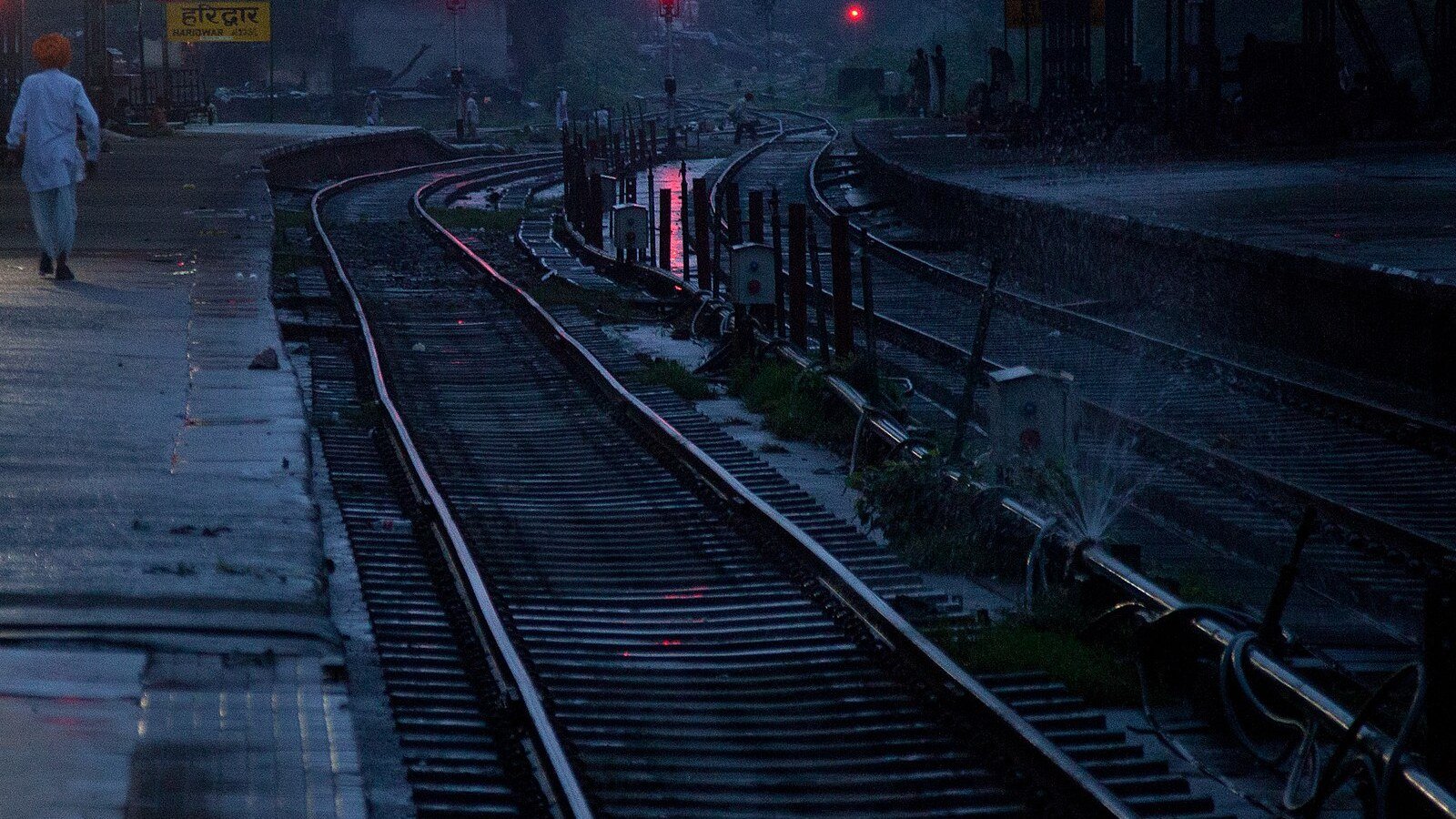
The return leg: the day you get back to Delhi
Badrinath to Haridwar is 319 km and ten to twelve hours. Nobody catches a same-day train from Badrinath, and anyone who tells you otherwise has not done the drive. The return is therefore a two-part day: Badrinath to Haridwar, sleep, then one of two trains.
| Train | Leaves Haridwar | Arrives Delhi | Best for |
|---|---|---|---|
| 22458 Vande Bharat | 8:09 AM | 11:45 AM at Anand Vihar | Getting home the same day and back to work |
| 12018 Shatabdi | 6:13 PM | 10:45 PM at New Delhi | A last morning at Har Ki Pauri and a full day in hand |
If you are flying out of Delhi, add a day rather than a buffer. A single landslide on the Alaknanda between Joshimath and Rudraprayag costs six hours, and the month-by-month guide lists the three 2026 suspensions that closed the corridor for days at a time.
Where to go next
If you have the transfer sorted, the next decisions are the shape of the circuit, the date, and the money. The 2027 hub tracks the opening dates, the itinerary gives you the seven, nine and eleven-day versions, the cost guide prices the circuit itself, and the packing list covers what goes in the car. For the four shrines, start with Yamunotri, the first one you reach from Barkot, and Kedarnath, which decides how the middle of the trip feels.
Frequently asked questions
Is there a direct train from Delhi to Haridwar?
Yes, more than a dozen a day. Four are worth planning around: the 6:45 AM Shatabdi (Haridwar 11:35 AM), the 3:20 PM Jan Shatabdi (7:27 PM), the 5:50 PM Vande Bharat (9:11 PM, not on Thursdays) and the 10:25 PM Mussoorie Express from Old Delhi (5:50 AM).
How far is Haridwar from Delhi?
About 220 km by road through Ghaziabad, Meerut, Muzaffarnagar and Roorkee, and 253 to 263 km by rail because the line loops through Saharanpur. A car takes four and a half to five and a half hours; the fastest train three hours twenty-one.
Can I do the Char Dham Yatra from Delhi in 7 days?
The seven-day version assumes a Haridwar start, so from Delhi it is nine days by road. With the overnight train out and a train back you can hold it to eight, but only if the car is waiting at Haridwar at 6:00 AM on day one.
Should I start from Haridwar or Rishikesh?
Haridwar if you are arriving by train, because that is where every fast Delhi train stops and Rishikesh is 25 km further. Rishikesh if you are driving and want the evening aarti — it also saves 25 km on the Barkot leg. Do not book a train to Rishikesh and assume it exists.
Do I need to book the Delhi–Haridwar train in advance?
In season, yes. The 60-day window means a mid-May 2027 seat opens in mid-March 2027, the same week registration opens. The overnight and the Shatabdi fill first.
Is the Delhi–Haridwar expressway open?
The Delhi–Dehradun expressway has been open since 14 April 2026 and takes about two and a half hours to Dehradun. The Delhi–Haridwar link is separate: the government announced on 27 October 2026 that it would open “next month”, but as of 9 November 2026 no opening has been notified. Plan four and a half to five and a half hours.
Can I drive my own car to Kedarnath?
To Sonprayag or Gaurikund, yes — but in season private vehicles are stopped at Sonprayag and a shared jeep covers the last 5 km. There is no road above Gaurikund; the final 16 km is the trail, on foot, pony or palki.
What time should I leave Delhi by car?
4:00 AM, or 4:30 AM at the latest. That puts you in Haridwar at 9:00 to 9:30 AM and in Rishikesh before 11:00 AM. Leaving at 7:00 AM means Ghaziabad in peak traffic and Haridwar at 1:00 PM.
Where should I stay on the first night?
It depends on your arrival. A 5:50 AM arrival should not book a room at all — go straight to Barkot. A late-morning or evening arrival should stay in Haridwar, walking distance from the station. After midnight, book a hotel with a 24-hour reception.
How do I get from Badrinath back to Delhi?
Drive Badrinath to Haridwar, 319 km and ten to twelve hours, sleep there, then take the 8:09 AM Vande Bharat to Anand Vihar (11:45 AM) or the 6:13 PM Shatabdi to New Delhi (10:45 PM). Do not plan a same-day connection.
Train numbers, timings and fares are the November 2026 timetable and booking-site fares, verified on 9 November 2026. Road timings are dry-weather figures for a private car and grow by 30 to 50 percent for a bus. The Delhi–Haridwar corridor is under active construction — check for an opening announcement, and the winter timetable, in the week you travel.