
Char Dham registration is free, online and takes about ten minutes per pilgrim — and it is the one step that still stops people at Sonprayag with the taxi already paid for. Every pilgrim must be registered before the yatra, every commercial vehicle needs its own permit, and the QR letter is checked again at the dham itself. For 2027 the window is not open yet: Uttarakhand Tourism has not announced the date, and on the 2026 pattern it opens in early March.
Quick answer: Register free at registrationandtouristcare.uk.gov.in, on the Tourist Care Uttarakhand app, or on WhatsApp at 8394833833 (send the word Yatra). Sign up, create a tour with your dates and dhams, add each pilgrim’s details, then download the Yatra Registration Letter with its QR code. In 2026 registration opened on 6 March; expect the same window in early March 2027. Vehicles are registered separately at greencard.uk.gov.in, after the pilgrims.
Last verified: 3 November 2026, against the Uttarakhand Tourism registration portal and its official WhatsApp registration guide, the Transport Department’s Green Card portal and fee page, the state health advisory for the yatra, and this site’s Kedarnath and kapat-date guides.
Registration at a glance
| Question | Answer |
|---|---|
| What does it cost? | Nothing. Pilgrim registration is free on every official channel. Only vehicle permits carry a fee. |
| Who has to register? | Every pilgrim, including children and those going by helicopter, plus the vehicle carrying them. |
| Where do I do it? | The tourism portal, the app, WhatsApp, or a physical counter at a gateway town. |
| What do I get? | A Yatra Registration Letter — a PDF with a unique registration number, a Group ID, a QR code, and each dham with its date. |
| When for 2027? | Not announced as of 3 November 2026. In 2026 the portal opened on 6 March, 43 days before the 19 April opening. |
What registration actually is — and what it is not
The system is called the Tourist Safety Management System, and it is a travel record, not a ticket. It tells the district administration who is on the mountain, at which dham, on which date, with which medical flags and which emergency contact — which is what makes search-and-rescue possible when a road washes out at Lambagad. It is not a temple entry ticket (darshan has its own queue and slot token), not a darshan booking, and not a fee: no government counter charges for pilgrim registration.
The 2027 calendar: when each piece opens
Registration opens well before the temples do, and vehicle permits open later still. The 2027 temple announcements are still pending, so treat this as the order to work in, with the 2026 dates as the reference.
| When | What happens | Status for 2027 |
|---|---|---|
| 11 February 2027 | Badrinath’s opening date is announced, on Basant Panchami. | Scheduled announcement |
| 6 March 2027 | Kedarnath’s opening date is read out at the Omkareshwar Temple, Ukhimath, on Maha Shivratri. | Scheduled announcement |
| Early to mid March 2027 | Online pilgrim registration opens on the portal, the app and WhatsApp. In 2026 it opened on 6 March. | Not announced — expected |
| Late March 2027 | Green Card issuance for commercial vehicles begins at ARTO offices. In 2026 it began on 30 March. | Expected, per 2026 pattern |
| 9 May 2027 | Yamunotri and Gangotri open, on Akshaya Tritiya. | Fixed by the panchang |
| Late April to mid May 2027 | Kedarnath and Badrinath open, a few days after the two Devi shrines. | Committee announcement pending |
Two consequences. If you travel in the opening fortnight, register the day the window opens rather than the week you leave — the dham dates you want can fill. And do not book a helicopter on an unannounced opening date; our kapat dates tracker keeps confirmed and calculated dates separate.
Register on the web portal: three steps
Step 1 — Register or log in. Create an account with name, mobile, email and a password, and confirm the OTP. The same login covers self, family and tour-operator registrations; an operator account also asks for company name and GST number. Keep that mobile number for the season — it is half of every lookup on the portal.
Step 2 — Create a tour. Choose the start and end dates, the number of tourists, which dhams you are visiting, and the date you will reach each one. This is the part people rush and regret: the dham dates on the letter are what the check point compares against, so enter the dates you will actually be there, not the dates you booked the hotel.
Step 3 — Add the pilgrims and download the letter. Each pilgrim needs name, age, gender, address and an ID number, plus an emergency contact who is not travelling with you. When the tour is complete, the portal generates the Yatra Registration Letter as a PDF with a QR code, the unique registration number and the Group ID. Print two copies and keep the PDF on two phones — it is checked at a counter in bad light.
Register on WhatsApp, when the portal is slow
Uttarakhand Tourism runs a WhatsApp flow that works when the website is crawling under opening-week traffic. It is the same database and produces the same letter. Save 8394833833, send Yatra, pick Char Dham Registration, and answer the prompts.
Three things are worth knowing before you start. It allows a maximum of five pilgrims per number — a family of six needs a second phone. It asks for the visit date of each dham separately, with two days required between two dham dates, so a plan that puts Yamunotri and Gangotri on consecutive days will not go through as typed. And it captures a photo, so the pilgrim has to be in front of the phone, not just their documents.
The flow also asks whether the pilgrim is cardiac, asthmatic or diabetic, and for any serious condition — answer honestly, because that flag is what puts a medical post on notice. Mode of travel (road, helicopter or walking) and the vehicle number are collected at the end.
What to have ready before you start
| Detail | What exactly | Why it matters |
|---|---|---|
| Aadhaar number | The 12-digit number, for Indian pilgrims. Foreign pilgrims select their country instead. | The letter is built on it; a typo makes it unusable at the check point. |
| Mobile number | One number reachable for the whole trip, with OTP access. | Needed to log in, re-download the letter and pull the Yatri Darshan Certificate later. |
| Photo | A clear face photo, taken in the flow or uploaded. | It appears on the letter beside the QR code. |
| Age and gender | For every pilgrim on the letter, children included. | Age drives the medical advisory; the form asks per pilgrim. |
| Dham dates | The date you expect to reach each of the four shrines. | The field the check point compares against your actual arrival. |
| Emergency contact | Name, phone and relation of someone not on the trip. | This is the number called if you are unwell or a route closes. |
| Vehicle number | Registration number of the car, taxi or bus, if known. | Links the pilgrim record to the vehicle’s Trip Card. |
| Photo ID to carry | The same government photo ID you entered — Aadhaar, voter ID, passport or licence. | The portal asks for valid personal ID proof, and the name must match. |
The counter option, and where the counters are
Physical counters run through the season for people who arrive without a smartphone or a working OTP. They sit at the gateway towns, not at the temples — so the mistake is planning to register at Kedarnath.
| Physical registration point | Dham it serves | Notes |
|---|---|---|
| Rahi Hotel, Haridwar | All four | The main counter for pilgrims starting from Haridwar. |
| Transit Camp, Rishikesh | All four | Bus and shared-vehicle arrivals land here. |
| Gurudwara, Rishikesh | All four | Second Rishikesh counter, useful when the transit camp queue is long. |
| Herbertpur and Nayagaon, Vikasnagar | Yamunotri, Gangotri | Two counters on the Dehradun–Barkot approach. |
| Barkot | Yamunotri | Last sizeable town before Janki Chatti. |
| Hina | Gangotri | On the Uttarkashi–Gangotri road. |
| Sonprayag | Kedarnath | Where the Kedarnath QR check happens, so counter and check point sit together. |
| Pandukeshwar | Badrinath | Short of Joshimath, if you skipped registration lower down. |
| Pulna and Govind Ghat | Hemkund Sahib | For the Hemkund Sahib trek, which uses the same system. |
What it costs — and what is not free
Pilgrim registration has no fee on any channel. The charges start with the vehicle, and they are set by the Transport Department. Anyone quoting a “registration charge” per pilgrim is selling their own time, not a government fee.
| Item | Official charge | Paid where |
|---|---|---|
| Pilgrim registration (all four dhams) | Free | Portal, app, WhatsApp or counter |
| Green Card, commercial vehicle up to 10 seats | ₹400 plus ₹50 user charges | greencard.uk.gov.in |
| Green Card, commercial vehicle over 10 seats | ₹600 plus ₹50 user charges | greencard.uk.gov.in |
| Trip Card, commercial vehicle | ₹100 plus ₹100 user charges | greencard.uk.gov.in, per trip |
| Private car or motorcycle | ₹50 user charges | greencard.uk.gov.in, at vehicle registration |
| Temple darshan, any dham | Free | Not part of registration at all |
Vehicles: the Green Card and the Trip Card
The vehicle paperwork is separate, paid, and runs in the opposite order to what people expect: pilgrims are registered first, because the Trip Card is built from the pilgrim Group ID. A commercial passenger vehicle — taxi, maxi, Tempo Traveller, bus — needs a Green Card once for the season and a Trip Card for each journey. A private car or motorcycle needs its vehicle registered and the ₹50 user charge paid.
The Green Card is issued after inspection and is a consolidated statement of fitness certificate, route permit, tax deposit, insurance and driving licence, so those must be current before you apply. The Trip Card then ties the vehicle and driver to a specific journey, matched to a tax receipt valid for the number of dhams you are doing. The driver’s hill endorsement comes from the same portal via an online questionnaire — do that before the trip, not at a barrier above Rudraprayag.
| Dhams on the trip | Tax receipt validity required |
|---|---|
| Four dhams | 10 days |
| Three dhams | 7 days |
| Two dhams | 5 days |
| One dham | 3 days |
If you booked through an operator this is normally their job — but ask for the Trip Card number before you leave, because it is their paperwork that fails at the check post, not yours.
Where the letter is actually checked
Registration is verified twice: once when you enter a dham’s inner route and once at the shrine. These are the check points the portal lists, and they are why a printed letter beats a screenshot on a phone with no signal.
| Check point | Dham | What happens |
|---|---|---|
| Sonprayag | Kedarnath | The QR e-pass is scanned before you join the Gaurikund shared-jeep queue; the darshan slot token is issued in the same area. |
| Janki Chatti | Yamunotri | Checked at the road head before the 6 km trek. |
| Gangotri temple | Gangotri | Checked at the shrine, since the road runs all the way to it. |
| Badrinath ISBT, BRO circle and Mana parking | Badrinath | Three points on the approach; the queue token counter sits with them. |
Kedarnath is the strictest, because everything funnels through one bridge at Sonprayag. Our Kedarnath guide has the sequence — Sonprayag, token, shared jeep to Gaurikund, then the 16 km walk or the helicopter from Sirsi, Phata or Guptkashi.
Group bookings: families, operators and the five-pilgrim cap
The portal recognises three registration types: self, family and tour operator. A family registration is one tour with several pilgrims on it, which is also how a group of friends should do it — one person creates the tour, adds everybody, shares the letter, and gives the Group ID to the driver.
WhatsApp caps you at five pilgrims per number. An operator should not be using WhatsApp for clients: operator accounts are created on the portal with company name and GST number, and that is the account type in the department’s authorised-agent list. If an agent asks for your Aadhaar over chat and “will register you”, check them against that list first.
The five mistakes that cost people a day
1. Dham dates that do not match the plan. The letter lists a date per dham and the check point reads it. If the itinerary moves a day, re-check the tour in the portal instead of travelling on a letter that says yesterday.
2. A name that does not match the ID. Initials, spelling and surname order have to match the letter. This is the single most common reason a family is held at a counter while a bus waits.
3. Pilgrims registered, vehicle not. A commercial vehicle without a Green Card is not allowed on the yatra routes, and a private car still needs its ₹50 user charge paid. That is not paperwork the driver can sort out later.
4. A letter nobody verified. The portal’s public verification page — registration number plus mobile — returns the name, Group ID, status and dham dates. Run it the night before you leave; it catches a half-finished registration in a minute.
5. Arriving in the opening fortnight without a slot token. Registration is not a darshan queue. At Kedarnath and Badrinath the token is separate and collected on the ground, and in the first ten days it decides your day more than registration does.
After darshan: the Yatri Darshan Certificate
Once your registration has been verified at a dham, the portal issues a Yatri Darshan Certificate against the same registration number and mobile. It is free, and only for a pilgrim actually verified at a specific shrine — it cannot be pulled in advance.
If the portal fights you
Uttarakhand Tourism helpline: 1364 (toll-free). Tourism and yatra control room: 0135 2559898, 0135 2552627, 0135 3520100, staffed 7:00 AM to 9:00 PM. Medical emergency: 108; the health department’s yatra helpline is 104. Police: 112. The Tourist Care Uttarakhand app carries the same registration flow plus SACHET safety alerts.
The health declaration is part of registration
The cardiac, asthmatic and diabetic questions exist because the shrines sit between 3,100 m and 3,600 m, and the state health advisory asks pilgrims over 55, pregnant women, and anyone with heart disease, hypertension, asthma or diabetes to get a fitness check-up first. It also asks for at least seven days on the trip to acclimatise, breaks every two hours of driving ascent, two litres of fluid a day, and no alcohol or sleeping pills on the route. Answer accurately even when it feels like paperwork: a flagged pilgrim gets met by a medical post, an unflagged one who collapses at Lincholi does not.
Where this fits in the planning
Registration is the first thing to do and the easiest to forget, because it sits between booking the trip and leaving. Do it the week the 2027 window opens, then build the rest around it: the day-by-day itinerary for how many days the circuit honestly takes, the kapat dates page for what is confirmed, and the Badrinath guide for the last leg most people rush.
Frequently asked questions
Is Char Dham registration free?
Yes. Pilgrim registration costs nothing on the portal, the app, WhatsApp or at a counter — the tourism portal describes it as a free exercise. Only vehicle permits charge: a Green Card is ₹400 or ₹600 by seating capacity plus ₹50 user charges, and a Trip Card is ₹100 plus ₹100 user charges.
When will Char Dham 2027 registration open?
Not announced as of 3 November 2026. In 2026 the portal opened on 6 March, 43 days before the 19 April opening, and Green Cards began on 30 March. Expect a similar early-to-mid March 2027 window, but treat it as a pattern until Uttarakhand Tourism publishes the date.
Can I register when I arrive instead?
Yes, at a physical counter — Haridwar, Rishikesh, Vikasnagar, Barkot, Hina, Sonprayag, Pandukeshwar and the Hemkund Sahib points. It works, but it costs you a queue on the day you wanted to drive, and the counters are in gateway towns, not at the temples.
How many people can I register at once?
On the portal, one tour can carry a family or group with each pilgrim added individually. On WhatsApp the cap is five pilgrims per phone number, so a group of six needs a second number. Operators register through an operator account, not WhatsApp.
Is Aadhaar mandatory?
For Indian pilgrims the WhatsApp flow asks for the 12-digit Aadhaar number, and the portal’s checklist asks you to carry valid personal ID proof. Foreign pilgrims select their country instead. Carry the same ID you entered — a mismatch is what stops you at the check point.
Do children need their own registration?
Every pilgrim on the letter is registered with name, age and gender, so a child travels as a registered pilgrim. The portal publishes no age exemption, and altitude does not care how old you are.
Do I need a separate registration for each dham?
No. One tour covers all four dhams with a separate visit date for each, and the same letter is checked at each of them. What is separate is the vehicle’s Trip Card, generated per journey.
Is registration needed if I fly to Kedarnath by helicopter?
Yes. The WhatsApp flow asks for your mode of travel, helicopter included, and the pilgrim registration is the same document either way. The helicopter ticket is a separate IRCTC HeliYatra booking and does not replace registration.
What happens if I reach Sonprayag without registration?
You will be stopped at the check point, where the QR e-pass is scanned before the shared-jeep queue. Sonprayag also has a registration counter, so the day is not lost — but you will be queuing with everyone else who did the same thing.
Can I change my dates after registering?
Check the tour in the portal first: if the dates can be edited, edit them and re-download the letter. If the tour is locked, register a fresh tour with the correct dates and carry the new letter. Do not travel on a letter whose dham dates no longer match your plan, because the check point compares the two.
Registration rules, fees and helpline hours are verified as of 3 November 2026 against the Uttarakhand Tourism portal, the official WhatsApp registration guide, the Transport Department Green Card portal and the state health advisory. The 2027 registration date and the Kedarnath and Badrinath opening dates remain unannounced.
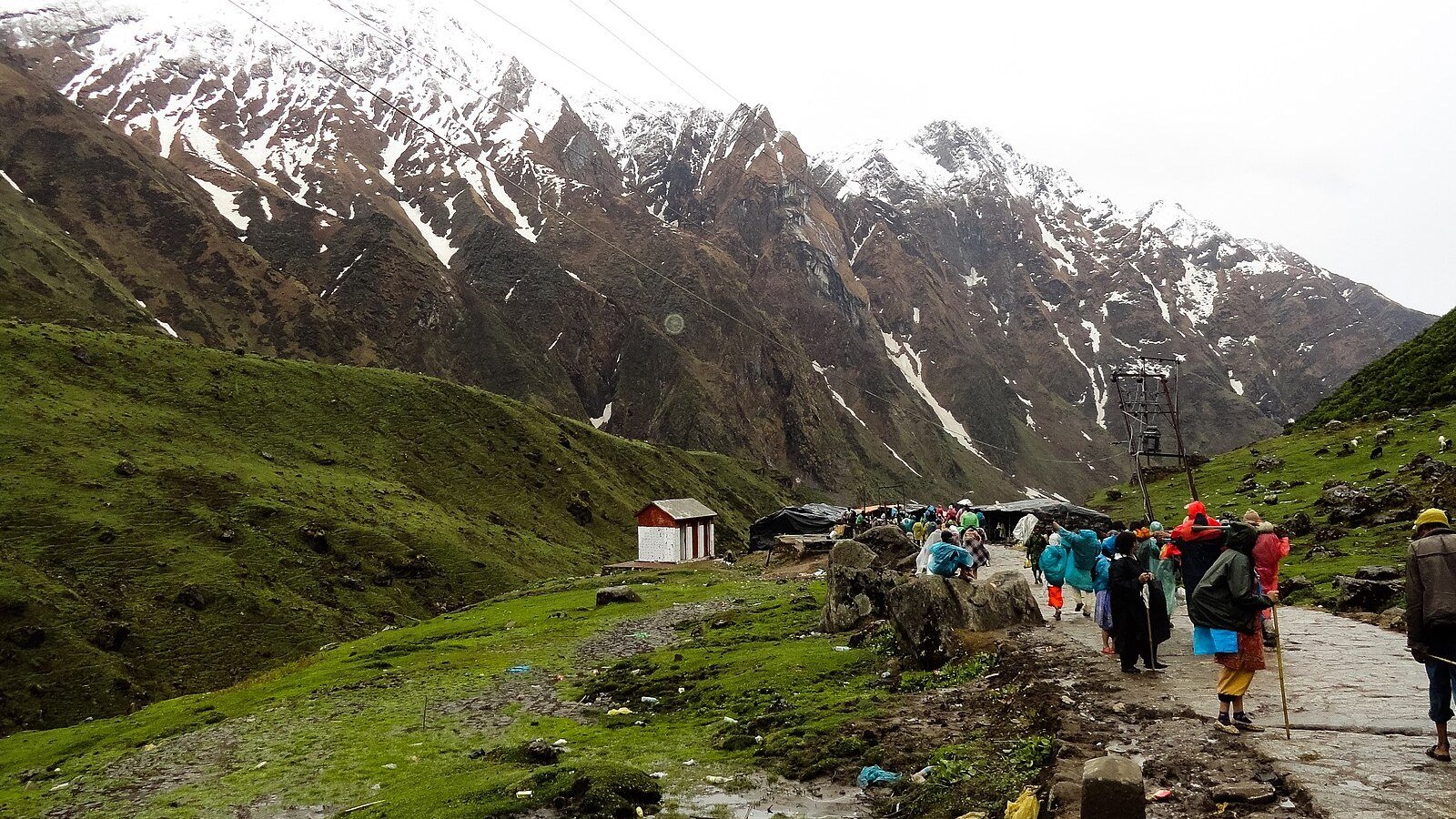
Header photo: pilgrims on the Kedarnath trek route during the yatra season. Image by Asdelhi95, CC BY-SA 4.0, via Wikimedia Commons.

2 comments on “Char Dham Yatra 2027 Registration: Steps, Documents, Cost”