

The Char Dham Yatra in 2027 is four temples, one 1,350 km loop, and a nine-day minimum — with a season whose first date is still a calculation rather than an announcement. Yamunotri and Gangotri open on 9 May 2027, Akshaya Tritiya, fixed by the panchang and confirmed by their temple committees nearer the time. Kedarnath’s opening is read out at Ukhimath on 6 March 2027, Maha Shivratri. Badrinath’s is announced at Narendra Nagar on 11 February 2027, Basant Panchami. Both of those are expected in the last week of April or the first half of May.
Quick answer: plan nine days and eight nights by road from Haridwar, in the order Yamunotri → Gangotri → Kedarnath → Badrinath, register free when the tourism portal opens in early March, and budget ₹28,000–45,000 per person sharing a private cab. Seven days works only if you fly the Kedarnath leg; eleven days is what most families and anyone over 60 should actually book.
Last verified: 5 November 2026, against the BKTC closing announcement of 20 October, the Gangotri and Yamunotri announcements, this site’s kapat tracker, the Uttarakhand registration portal, IRCTC HeliYatra fares, GMVN’s 2026 tariffs and the state yatra organisation’s footfall series. Where a 2027 date is an expectation, it is labelled as one.
Char Dham Yatra 2027 at a glance
Four shrines, two districts in the west and two in the east, joined by a single road through Rudraprayag. Only two of them let a vehicle reach the door.
| Dham | Altitude | District | 2027 opening | How you reach it |
|---|---|---|---|---|
| Yamunotri | 3,291 m | Uttarkashi | 9 May 2027 (panchang) | Road to Janki Chatti, then a 5–6 km trek |
| Gangotri | 3,100 m | Uttarkashi | 9 May 2027 (panchang) | Road all the way to the temple |
| Kedarnath | 3,583 m | Rudraprayag | Announced 6 March 2027 | Road to Gaurikund, then a 16 km trek, or helicopter |
| Badrinath | 3,133 m | Chamoli | Announced 11 February 2027 | Road all the way to the temple gate |
The season also ends in a fixed order, which is not the order you visit in. The 2026 closings were declared on Vijayadashami, 20 October: Gangotri on 10 November at 12:05 PM, Yamunotri on 11 November at 10:28 AM, Kedarnath the same day at 8:30 AM, and Badrinath last on 16 November at 9:37 PM. The deities move to Mukhba, Kharsali, Ukhimath and Joshimath, where darshan continues all winter — the answer for anyone who cannot travel between May and November.
Two numbers decide every plan below: the circuit is about 1,350 km by road from Haridwar and back, and 22 km on foot if you walk both treks.
When does the Char Dham Yatra 2027 start?
The yatra starts when the first two doors open, and that is 9 May 2027 for Yamunotri and Gangotri. But “start” means two different things to two different people: the temple season begins on 9 May, while a road yatra from Haridwar has to begin with registration, a vehicle permit and a bed for the first night. Registration normally opens about six to eight weeks earlier, in early March.
| Dham | Opened in 2026 | Closed in 2026 | Winter seat | 2027 opening | Status of the 2027 date |
|---|---|---|---|---|---|
| Yamunotri | 19 April 2026 | 11 November 2026, 10:28 AM | Kharsali | 9 May 2027 | Panchang-calculated (Akshaya Tritiya); committee confirmation pending |
| Gangotri | 19 April 2026 | 10 November 2026, 12:05 PM | Mukhba | 9 May 2027 | Panchang-calculated (Akshaya Tritiya); committee confirmation pending |
| Kedarnath | 22 April 2026, 8:00 AM | 11 November 2026, 8:30 AM | Ukhimath | Late April – early May 2027 | Announced at Ukhimath on Maha Shivratri, 6 March 2027 |
| Badrinath | 23 April 2026, 6:15 AM | 16 November 2026, 9:37 PM | Joshimath | Late April – early May 2027 | Announced at Narendra Nagar on Basant Panchami, 11 February 2027 |
Read that table as three levels of certainty. Yamunotri and Gangotri are decided by the tithi: Akshaya Tritiya, the third lunar day of the bright half of Vaishakh, falls on 9 May in 2027. Kedarnath and Badrinath are decided by ceremony — the date is calculated by the Rawal and the Vedic scholars and read out publicly, at Ukhimath for Kedarnath and at the Tehri Raj Darbar in Narendra Nagar for Badrinath. Until those two mornings, their dates are arithmetic, not commitments.
That gap matters commercially: operators sell “2027 packages” now, and a date that moves by two weeks turns a confirmed booking into an argument. Book refundable rooms; hold the non-refundable helicopter seat and the pony until the committee has spoken.
One calendar note: Akshaya Tritiya lands on 9 May, three weeks later than the 19 April opening of 2026. A later start compresses the pre-monsoon window that carries the heaviest footfall, because the season still has to be wound up before the November kapat. If you want the opening fortnight, that is the year to book beds in February rather than April.
The 2027 calendar, in the order things happen
This is the sequence to work in. Only two of these dates are fixed by an authority today; the rest are the 2026 pattern, which has held for several years.
| When | What happens | How firm it is |
|---|---|---|
| 11 February 2027 | Badrinath’s opening date is announced at the Tehri Raj Darbar, Narendra Nagar, on Basant Panchami | Scheduled ceremony |
| 6 March 2027 | Kedarnath’s opening date is read out at the Omkareshwar Temple, Ukhimath, on Maha Shivratri | Scheduled ceremony |
| Early to mid March 2027 | Online pilgrim registration opens on the portal, the app and WhatsApp. In 2026 it opened on 6 March | Not announced — expected |
| Late March 2027 | Green Card issuance for commercial vehicles begins at ARTO offices. In 2026 it began on 30 March | Expected, per 2026 pattern |
| 9 May 2027 | Yamunotri and Gangotri open on Akshaya Tritiya | Fixed by the panchang |
| Late April – mid May 2027 | Kedarnath and Badrinath open, a few days after the two Devi shrines | Committee announcement pending |
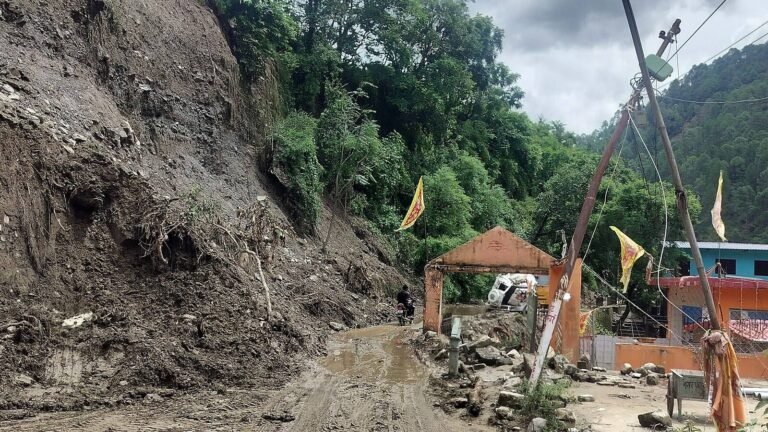
| June – September 2027 | Monsoon. Road legs stretch by two to three hours; keep a buffer day | Weather, every year |
| September – October 2027 | Second footfall phase from mid-September; helicopter operations end a few days before the kapat (9 November in 2026) | Confirmed pattern |
The last row is the one people miss. The helicopter does not fly until the temple closes — in 2026 the shuttle flights stopped on 9 November, two days before Kedarnath’s kapat on 11 November. A heli ticket bought for the final week is not a plan, it is a hope.
What changed after the 2026 season
2026 was the biggest Char Dham year on record, and that is the most useful planning fact for 2027: everything that felt crowded last May will be at least as crowded this May. The footfall series runs 44,37,028 in 2022, 54,36,172 in 2023, 46,17,445 in 2024, 48,31,905 in 2025 and 58,40,451 by 27 October 2026, with the Chief Minister putting the full-season figure at 60–61 lakh. The counts include Hemkund Sahib, which shares the Govind Ghat road with Badrinath.
Two consequences: the pinch is the opening fortnight and the May–June weekends rather than the whole season, and September has become a real season again — roughly 35,000 pilgrims a day in its last three weeks, which makes late September a better bet than late June for anyone who can choose.
The Kedarnath ropeway is not a 2027 option. The 12.9 km Sonprayag–Kedarnath ropeway was approved at ₹4,081 crore under the Parvatmala Pariyojana and awarded to Adani Enterprises, with six years of construction and an expected opening in 2031–32: 1,800 pilgrims an hour each way, under an hour in the air, against a 16 km trek that takes most people seven to eight hours up. In 2027 the ground route is still Gaurikund on foot, by pony, or by helicopter from Sirsi, Phata or Guptkashi.
A second access project is further behind: a proposed 7 km twin-tube tunnel from Chaumasi in the Kalimath valley to Sonprayag, an alternative to NH-107 that is still at feasibility stage and changes nothing about 2027.
What has changed on the ground is enforcement, not infrastructure. Registration is checked biometrically at Sonprayag before you are allowed up towards Gaurikund, and on the Badrinath road at Gauchar, Pandukeshwar, the Joshimath entry and the temple gate; in 2024 officials turned back more than 650 pilgrims at Gauchar alone. Two things did not change: registration is still free on every official channel, and the only government charges are vehicle permits.
The route, leg by leg
West to east, one pass across Garhwal. These are the legs you actually drive, with private-cab times in dry weather; add 30 to 50 percent for a bus and two to three hours to any leg in monsoon.
| Leg | Distance | Driving time | What the road is like |
|---|---|---|---|
| Haridwar → Barkot | ~190 km | 7–8 hrs | Highway to Rishikesh, then hill road via Chamba and Dharasu Bend |
| Barkot → Janki Chatti | 45 km | 1.5 hrs | Narrow valley road above the Yamuna; last stretch is single-lane |
| Janki Chatti → Yamunotri | 5–6 km trek | 3–4 hrs up, 2 hrs down | Steep stone steps; pony, palki and doli from the prepaid counter |
| Janki Chatti → Uttarkashi | ~123 km | 4–5 hrs | Down the Yamuna, then along the Bhagirathi; good surface |
| Uttarkashi → Gangotri | 100 km | 3.5–4.5 hrs | Climbs through Dharali and Harsil; the prettiest leg of the circuit |
| Gangotri → Guptkashi | ~310 km | 10–11 hrs | The long day: back through Uttarkashi, then Tehri and Rudraprayag |
| Guptkashi → Sonprayag | ~30 km | 1 hr | Descends to the Mandakini; private vehicles stop here |
| Sonprayag → Gaurikund | 5 km | 20–30 min | Shared jeep only, ₹50–100 a seat; the queue is longest before 6 AM |
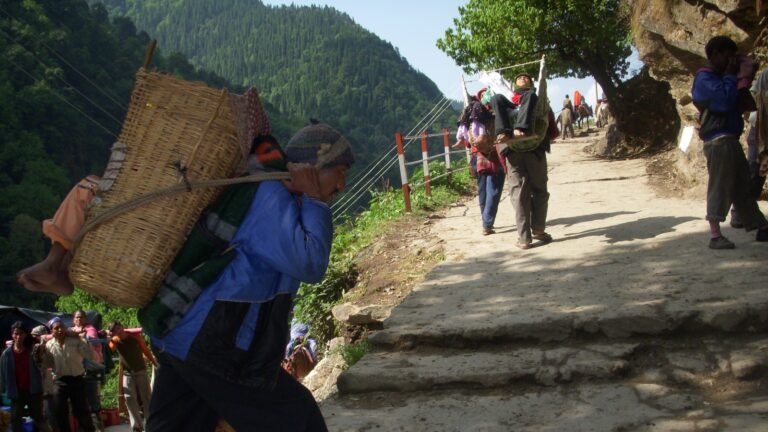
| Gaurikund → Kedarnath | 16 km trek | 7–8 hrs up, 5–6 hrs down | Paved but relentlessly steep; pony and kandi from the counter |
| Gaurikund → Badrinath | ~230 km | 9–10 hrs | Via Rudraprayag and Joshimath; the Alaknanda the whole way |
| Badrinath → Haridwar | ~320 km | 11–12 hrs | Long descent via Joshimath and Devprayag, then Rishikesh |
The order is not folklore. Yamunotri at 3,291 m and Gangotri at 3,100 m come first, which gives you two nights above 3,000 m before Kedarnath at 3,583 m — the cheapest acclimatisation on this route. Reversing the circuit is legal, and some operators sell it to dodge crowds, but it puts the highest shrine first and adds distance at the end. The one good reason to reverse is joining from Joshimath, or travelling in the last week of the season when Badrinath is the only shrine still open.
Two legs break more plans than the rest. Gangotri to Guptkashi is a ten-hour driving day on its own, so anyone who adds a darshan to it arrives after dark. And the Sonprayag jeep queue is the most predictable delay on the circuit: reach Sonprayag before 6 AM or accept an hour’s wait.
How many days do you actually need?
Nine is the honest floor for a road yatra. The driving alone is 32 to 36 hours — six travel days before any darshan, trek or rest — and that is arithmetic, not opinion.
| Plan | Days / nights | Road distance | On foot | Who it suits |
|---|---|---|---|---|
| Fast loop | 7 days, 6 nights | ~1,350 km | 6 km at Yamunotri, helicopter at Kedarnath | Fixed leave and a helicopter budget; every day is a transfer day |
| Standard loop | 9 days, 8 nights | ~1,350 km | 22 km — 6 km Yamunotri, 16 km Kedarnath | Most first-timers, couples, groups under 60 |
| Relaxed loop | 11 days, 10 nights | ~1,350 km | 22 km, pony or palki optional | Families, pilgrims over 60, anyone travelling in monsoon |
Eight days is possible if you walk Kedarnath up and down in one punishing day — 16 km up, darshan, 16 km down, then a two-hour drive — which is the most common way people ruin this trip. From Delhi, add a day at each end. In July and August, add another for a landslide halt.
Registration: free, compulsory, and open from early March
Every pilgrim registers, including children and anyone flying to Kedarnath, and so does the vehicle. It costs nothing on any official channel.
| Item | Official charge | Where |
|---|---|---|
| Pilgrim registration, all four dhams | Free | Portal, app, WhatsApp or a physical counter |
| Green Card, commercial vehicle up to 10 seats | ₹400 + ₹50 user charges | greencard.uk.gov.in |
| Green Card, commercial vehicle over 10 seats | ₹600 + ₹50 user charges | greencard.uk.gov.in |
| Trip Card, commercial vehicle | ₹100 + ₹100 user charges | greencard.uk.gov.in |
| Private car or motorcycle, per trip | ₹50 user charges | greencard.uk.gov.in |
What you need before you start: a government photo ID per person (Aadhaar is what the biometric check reads), one mobile number with OTP access, a face photo, the date you expect to reach each dham, and an emergency contact who is not on the trip. The dham dates you enter are what the check point compares against your actual arrival, so enter the dates you will be there, not the dates you booked the hotel.
You get a Yatra Registration Letter — a PDF with a registration number, a Group ID and a QR code. Keep the Group ID: it is the number you enter when booking a Kedarnath helicopter seat. Print two copies and keep the PDF on two phones, because the counters are checked in bad light.
Registration for 2027 is not open as of 5 November 2026. In 2026 the portal went live on 6 March, 43 days before the 19 April opening, and vehicles followed on 30 March. The step-by-step, the WhatsApp flow and the counter list are in the Char Dham Yatra registration guide.
What the yatra costs in 2027
2027 tariffs are not published yet. On the current structure, with a 6–8 percent revision assumed, these are the bands to budget inside, per person, from Haridwar or Rishikesh, for the full circuit.
| Style | What it includes | Per person |
|---|---|---|
| Backpacker | UTC and private buses, shared jeeps, dormitory and TRH beds, both treks on foot, meals in dhabas | ₹18,000 – ₹26,000 |
| Private cab, four sharing | Ertiga or Innova for ten days, mid-range hotels on twin sharing, both treks on foot, meals | ₹28,000 – ₹42,000 |
| GMVN fixed departure | Government tempo traveller or bus, twin-sharing TRH rooms, meals extra, seat price fixed | ₹31,000 – ₹43,000 |
| Comfortable | AC Innova Crysta, family rooms, one pony leg, hot water every night | ₹48,000 – ₹68,000 |
| Kedarnath by helicopter | Cab circuit plus a return helicopter instead of the 16 km trek | ₹55,000 – ₹80,000 |
| All four by helicopter | Five nights from Dehradun, every sector flown, hotels and transfers included | ₹85,000 – ₹2,20,000 |
Only one package price on the internet can be held to a published tariff: GMVN’s, the state tourism corporation’s fixed departures. These are its 2026 seat charges, the best available guide to 2027 until the new tariff is posted.
| GMVN tour | Route and duration | Vehicle | Peak season | July–August |
|---|---|---|---|---|
| Tour 2 | Haridwar – Kedarnath – Badrinath – Haridwar, 6 nights | 27-seater non-AC bus | ₹23,560 | ₹18,850 |
| Tour 6 | Haridwar – all four dhams – Haridwar, 10 nights | 12-seater non-AC tempo traveller | ₹38,670 | ₹30,940 |
| Tour 8 | Rishikesh – Kedarnath – Badrinath – Rishikesh, 6 nights | AC Innova | ₹35,350 | ₹28,280 |
| Tour 10 | Rishikesh – all four dhams – Rishikesh, 10 nights | AC Innova | ₹54,980 | ₹44,000 |
Peak means May, June, September and October. Senior citizens pay 15 percent less on transport — men over 60, women over 55, with an age certificate — which brings Tour 10 to ₹50,130. Read the exclusions before comparing GMVN with a private quote: no meals, no pony, dandi or helicopter, and a cancellation ladder of 10 percent at 15 days, 20 percent at 14–8 days, 40 percent at 7–3 days and 90 percent inside two days, with no refund if GMVN cancels for a natural calamity.
The four line items that decide whether you spend ₹25,000 or ₹60,000 are season, how many people share the vehicle, whether you pay for a pony, and whether Kedarnath is flown. The full arithmetic, including cab quotes and hotel bands, is in the Char Dham Yatra cost guide.
Kedarnath: walk, pony or fly
This is the only leg where the choice of transport changes both the cost and the itinerary length, so it deserves its own table. Fares below are the 2026 IRCTC rates, which is what 2027 will be benchmarked against.
| Option | 2026 fare | Time | What to know |
|---|---|---|---|
| Trek from Gaurikund | Free | 7–8 hrs up, 5–6 hrs down | Paved path, relentless gradient; start before 5 AM to be down by evening |
| Pony or palki | Prepaid counter rates, paid on the spot | 5–7 hrs each way | Book at the Gaurikund counter, not from a tout on the road |
| Helicopter from Sirsi | ~₹6,086 return | A few minutes in the air plus transfers | Closest helipad to the shrine; the cheapest of the three |
| Helicopter from Phata | ~₹9,680 return | A few minutes in the air plus transfers | Middle distance, more departures in peak season |
| Helicopter from Guptkashi | ~₹12,154 return | A few minutes in the air plus transfers | Furthest helipad, longest transfer, same shrine |
Add a ₹300 IRCTC convenience fee and 18 percent GST to every helicopter fare. Tickets are sold only on heliyatra.irctc.co.in, against your registration Group ID, with baggage weighed at the helipad — excess is charged per kilogram, per person. Expect dynamic pricing of 20 to 50 percent in the first fortnight.
One rule: heli tickets are non-refundable and weather-dependent. Do not buy one for a date the temple committee has not announced, and not for the last three days of the season — in 2026 the shuttle stopped on 9 November, two days before the kapat.
All four shrines sit between 3,100 m and 3,600 m. The state health advisory asks pilgrims over 55, pregnant women, and anyone with heart disease, hypertension, asthma or diabetes to get a fitness check-up first, and asks for at least seven days on the trip, a break every two hours of driving ascent, two litres of fluid a day, and no alcohol or sleeping pills on the route. The order of the circuit is itself a health measure: two nights at 3,100–3,300 m before the 3,583 m shrine.
Where to go next
Each shrine has its own guide with darshan timings, puja rates, where to sleep and what the last kilometre is like.
- Kapat dates 2026–2027 — the opening and closing tracker, updated as committees announce.
- Char Dham Yatra itinerary — day-by-day plans for 7, 9 and 11 days.
- Char Dham Yatra registration — the portal, the app, the WhatsApp flow, and the rejections to avoid.
- Char Dham Yatra cost — the arithmetic behind every band on this page.
- Yamunotri · Gangotri · Kedarnath · Badrinath — the four dham guides.
Frequently asked questions
When does the Char Dham Yatra 2027 start?
Yamunotri and Gangotri open on 9 May 2027, Akshaya Tritiya, fixed by the panchang and confirmed by their committees. Kedarnath’s date is announced at Ukhimath on 6 March 2027, Badrinath’s at Narendra Nagar on 11 February; both are expected in late April or early May.
Is Char Dham Yatra 2027 registration open?
No. As of 5 November 2026 the Uttarakhand portal has no live 2027 window. In 2026 registration opened on 6 March, 43 days before the season, and vehicle Green Cards followed on 30 March. Register the day it opens if you want the first fortnight.
How many days does the Char Dham Yatra take?
Nine days and eight nights by road from Haridwar is the realistic minimum, because the driving alone is 32 to 36 hours. Seven days works only with a helicopter at Kedarnath. Eleven days is the right answer for families, pilgrims over 60 and anyone travelling in monsoon.
What is the best time for the Char Dham Yatra in 2027?
Late May and early June for settled weather, or the second half of September for smaller crowds and the same clear skies. Avoid the opening fortnight if you dislike queues, and treat July and August as a different trip: cheaper, greener, and one landslide away from a reshuffled itinerary.
Can I do the Char Dham Yatra without trekking?
Badrinath and Gangotri need no trekking — the road reaches both temples. Yamunotri still needs 5–6 km on foot, pony or palki, and Kedarnath 16 km on foot or a helicopter from Sirsi, Phata or Guptkashi. The Sonprayag–Kedarnath ropeway is not expected before 2031–32.
Is the Kedarnath ropeway open for the 2027 season?
No. The 12.9 km Sonprayag–Kedarnath ropeway was approved at ₹4,081 crore and awarded to Adani Enterprises, with six years of construction and an expected opening in 2031–32. For 2027 the choices are the 16 km trek, a pony or palki, or a helicopter from Sirsi, Phata or Guptkashi.
How much does the Char Dham Yatra 2027 cost per person?
₹28,000–45,000 for the full circuit sharing a private cab with two to four people and walking both treks. Bus and dormitory runs ₹18,000–26,000, and flying the Kedarnath leg adds ₹7,000–12,000. GMVN’s 2026 fixed departure was ₹38,670 peak and ₹30,940 in July–August.
Do senior citizens need a medical certificate?
The state health advisory asks pilgrims over 55, pregnant women, and anyone with heart disease, hypertension, asthma or diabetes to get a fitness check-up before travelling, and the registration form records those conditions. Carry any prescribed medicines in original packaging, and plan the 11-day version rather than the 9-day one.
Which dham should I skip if I only have five days?
Yamunotri and Kedarnath — take Gangotri and Badrinath, the two drive-in shrines. Five days from Haridwar covers Gangotri, Badrinath and a night in Joshimath without a single hour on a trail. With a helicopter budget, fly Kedarnath and drive Badrinath instead.
Is the Char Dham Yatra safe in monsoon?
Open and manageable, but a different trip: two to three hours added to any road leg, at least one landslide halt, and helicopter cancellations. Keep a spare day, drive in the morning rather than after dark, and check the road status for your first two legs the week before.
Header photo: the Bhagirathi valley at Harsil, on the Gangotri leg of the circuit. Image by Harshit SR, CC BY-SA 4.0, via Wikimedia Commons.

1 comment on “Char Dham Yatra 2027: Dates, Route, Registration and Cost”